
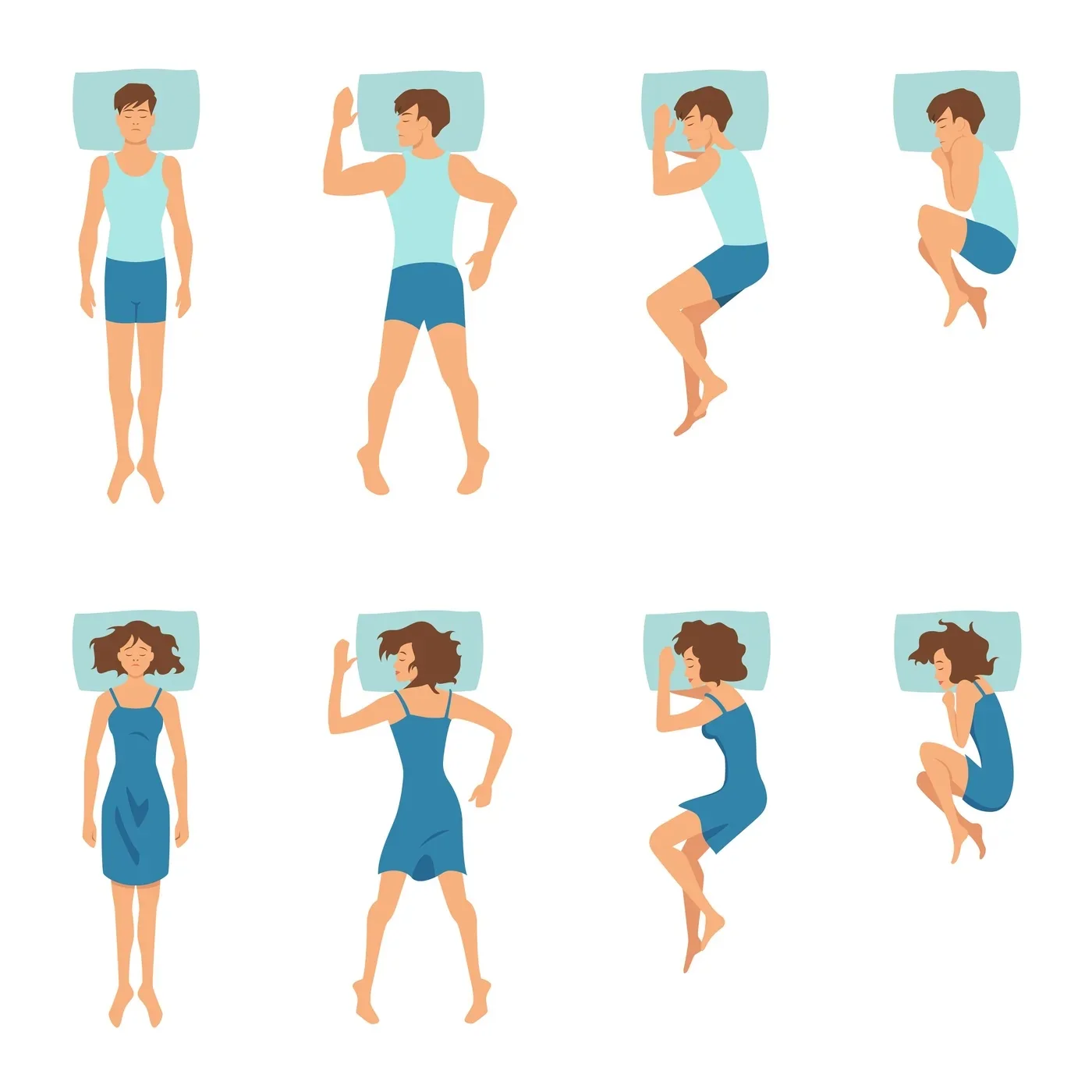
We spend around a third of our lives sleeping, so it makes sense that how we sleep can have an impact on how our body feels when we wake up.
If you regularly wake with a stiff neck, sore back or feel like you need to “warm up” in the morning, your sleeping position could be one piece of the puzzle.
Is there a “best” sleeping position?
There isn't one perfect position for everyone.
The most important thing is that your spine feels comfortable, supported and relatively neutral while you sleep.
Sleeping on your side
Side sleeping is a popular and comfortable position for many people.
A pillow that keeps your head and neck in line with your spine can help prevent your neck from being pushed too far up or down. A pillow between your knees can also provide additional comfort and support.
Sleeping on your back
Sleeping on your back allows your spine to rest in a fairly neutral position.
A pillow that supports your head without pushing your chin towards your chest can help keep your neck comfortable. Some people also find placing a pillow under their knees comfortable.
What about sleeping on your stomach?
Sleeping on your stomach isn't necessarily “bad”, but it can place more rotation through your neck because your head needs to turn to one side to breathe.
If you’re comfortable sleeping this way and wake feeling good, there may not be a reason to change it. But if you regularly wake with neck or back discomfort, experimenting with another position may be worthwhile.
Your pillow matters too
Sometimes it's not just your sleeping position.
Your pillow plays an important role in supporting your head and neck throughout the night. The right pillow will depend on your body, your sleeping position and what feels comfortable for you.
And remember, you don't need to stay perfectly still all night. We naturally move and change positions while we sleep.
The goal isn't to find a “perfect” position, it's to find a setup that allows your body to rest comfortably and recover overnight.
If you're regularly waking with pain or stiffness, don't simply assume it's your mattress or your sleeping position. There can be many factors involved, and it's worth having persistent symptoms assessed by an appropriate healthcare professional.
Sometimes, a few small changes to how you sleep can make your mornings feel a whole lot better.
Yours in health,
♡ Dr Diana & the Blossom Team